
Indonesia's Halal Rule for Cosmetics: What Importers Need to Know

Indonesia has started enforcing mandatory halal certification for a wide range of imported goods, including cosmetics, starting in mid-October 2026. For a wholesale buyer who sources Thai beauty products and resells into Indonesia, or into any market that watches Indonesia's rules as a benchmark, this is one of the more consequential regulatory shifts of the year.
Under the new rule, cosmetics join food, beverages, medicine and several chemical categories as "controlled" products. A shipment entering Indonesia is expected to carry a valid halal certificate, and that certificate generally needs to be issued inside Indonesia or by a certifying body that Indonesia's halal authority, BPJPH, formally recognizes. A certificate from a different country's halal body is not automatically accepted just because the word "halal" appears on the label.
The practical effect reaches beyond Indonesia itself. Malaysia has been tightening how it enforces its own halal logo and certification process, and buyers in Gulf and Middle East markets increasingly treat halal status as a basic qualifying question rather than a bonus feature. A product that cannot answer that question clearly becomes harder to place across several export markets at once, not only the one with the new deadline.
This fits a broader pattern in the region. Industry events covering Southeast Asian beauty have been giving more attention to halal beauty specifically, and some Thai ingredient suppliers have talked about partnering with Malaysian certifiers so a product can use that certification as a stepping stone into Middle Eastern markets, rather than starting a separate certification process for each country.
For a buyer, the useful habit is to ask the question early rather than late. Before committing to a purchase order, ask the Thai brand or supplier whether the specific product already holds a halal certificate, which body issued it, and whether that body is one the destination market's halal authority recognizes. Asking after the goods are packed and the shipment is booked leaves no room to fix a mismatch.
None of this is advice on how to file for certification or how to interpret the regulation. That sits with Indonesia's BPJPH, Malaysia's equivalent body, or the relevant authority in whichever market a buyer is shipping to, and the practical details continue to be clarified as the deadline passes. Thailand's own trade promotion office has been briefing exporters and is a reasonable place to check for the current state of any mutual recognition arrangement with Indonesia.
What a sourcing and export partner like Pimmycool can do here is practical rather than regulatory: collect whatever certification documentation a Thai brand already holds, pass it along with the rest of the shipment paperwork, and flag early if a product a buyer is asking about does not carry any halal certificate at all. The certification decision itself belongs to the brand that owns the product and the authority in the buyer's destination market.
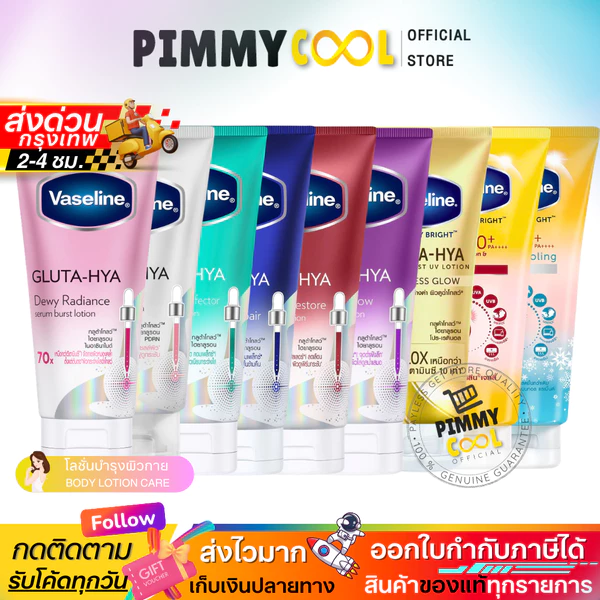
Product featured in this article: Vaseline Healthy Gluta Hya Serum Lotion, 290 ml
Products in this article
 -35%
Vaseline Healthy Gluta Hya Serum Lotion, 290 ml
Vaseline gluta hya serum body lotion in six variants
 -36%
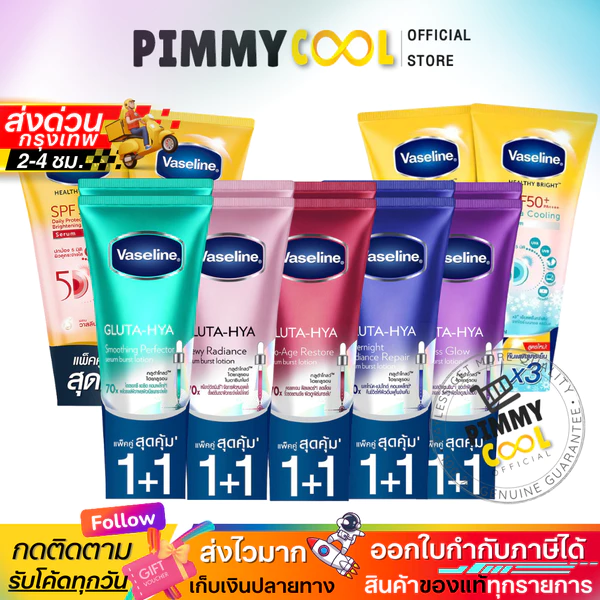
Vaseline Healthy Bright Gluta Hya Serum Lotion, 290 ml (Twin Pack)
Vaseline gluta hya serum body lotion, four variants, twin pack
-35%Vaseline Healthy Gluta Hya Serum Lotion, 290 ml
Vaseline gluta hya serum body lotion in six variants
 -35%
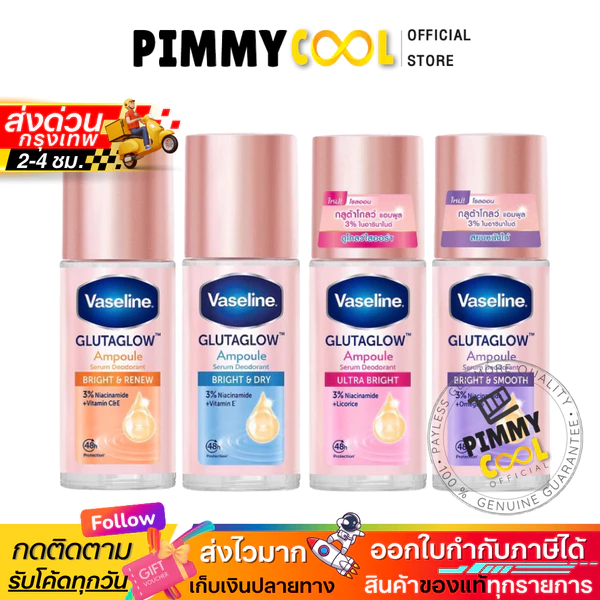
Vaseline Gluta Glow Ampoule Serum Roll-On Deodorant, 45 ml
Vaseline antiperspirant dry serum roll-on, four variants, 45 ml