
Shipping From Thailand to Myanmar and Laos by Truck

For a wholesale buyer in Yangon or Vientiane, the fastest and most established way to bring in Thai beauty and household goods is not by sea. It is by truck. Thailand's land borders with Myanmar and Laos carry a large, continuous flow of commercial freight every day, and for smaller or first-time orders this overland route is usually simpler and cheaper to set up than booking a sea container. The main crossings are Mae Sot-Myawaddy on the Myanmar side, and Nong Khai-Vientiane and Mukdahan-Savannakhet on the Laos side, all connected to Thailand's road network and, for Laos, to rail links as well.
Overland freight is the default route for this trade, not a workaround. All three crossings have permanent, staffed customs posts, dedicated cargo lanes, and bridges built for truck traffic: the Thai-Myanmar Friendship Bridge at Mae Sot, and the first and second Thai-Lao Friendship Bridges at Nong Khai and Mukdahan. Thailand, Myanmar, and Laos are all ASEAN members, so goods that qualify under the ASEAN Trade in Goods Agreement (ATIGA) can move at a preferential tariff, often duty-free, provided they meet the rules of origin and travel with a Form D certificate of origin. Whether a given product qualifies depends on its inputs and classification, so confirm it case by case rather than assume.
The practical advantage for a buyer is volume. A sea container shipment to the Gulf or into China typically needs enough product to fill or part-fill a 20-foot or 40-foot box, which pushes the minimum order size up. A truckload crossing at Mae Sot or Nong Khai has a much lower threshold. A single truck, or even a shared truck, can carry a mixed pallet of skincare, personal care, and household items. That makes the land route a realistic way to place a first order, test a market, or restock a shop without committing to container-scale quantities.
In practice, the part of the deal that causes the most friction is rarely the freight. It is payment and currency. Thai suppliers generally invoice and are paid in Thai baht or US dollars, and cross-border transfers into Myanmar or Laos can be slowed by banking restrictions, currency controls, or exchange availability on the buyer's side. It is worth agreeing payment terms, currency, and transfer method with the supplier before the order is confirmed, rather than after the truck is loaded.
Documentation is checked physically at the border, not only on paper. A shipment typically travels with a commercial invoice, a packing list, a Form D certificate of origin if preferential tariff is being claimed, and any product-specific paperwork the destination requires. Getting a product registered for sale there is the importer's responsibility, not the Thai supplier's. Myanmar's Food and Drug Administration and Laos's Food and Drug Department both run registration processes for cosmetics and other regulated categories, and requirements change, so confirm the current process with the relevant authority or a licensed customs broker before the first shipment, rather than assume old paperwork still applies.
A first order between a Thai supplier and a new overland buyer is usually structured in stages: a quotation and sample review, agreement on incoterms (commonly FOB or delivered-at-border pricing), a deposit, then stock allocation and a confirmed pickup date for the truck. From a Thai supplier, ask for the commercial invoice, packing list, Form D if claiming ATIGA preference, any export permit the product category requires, and the supplier's export track record on that specific crossing. Not every Thai brand has shipped overland before, and one who has done it regularly on the same route can usually predict transit time and paperwork more accurately.
None of this replaces confirming requirements directly with customs and the destination market's own regulator before committing to a shipment; rules and processes are updated from time to time, and the buyer, not the supplier, carries the registration responsibility on the receiving end. For a buyer weighing sea freight against land freight into Myanmar or Laos, the practical difference is less about distance and more about scale. Land freight opens the door to smaller, faster first orders, while the real planning work goes into currency, documentation, and destination-market registration rather than the truck ride itself.
Product featured in this article: Nongluk Herbal Relief Balm for Aches and Sensitive Skin
Products in this article
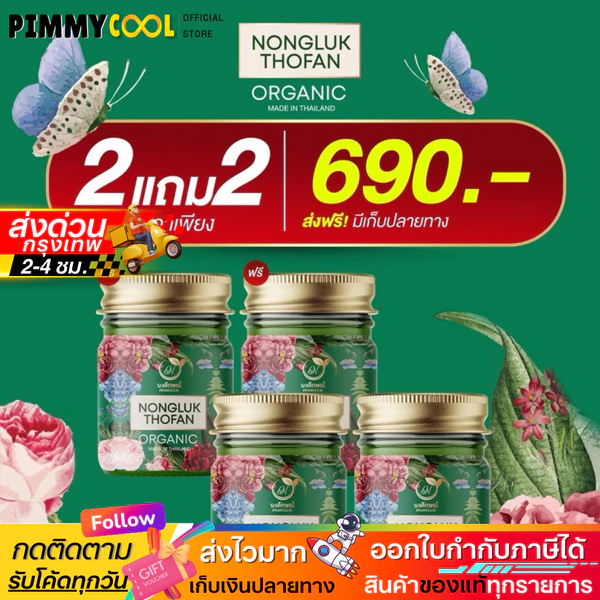 -21%
Nongluk Herbal Relief Balm for Aches and Sensitive Skin
Nongluk organic green herbal balm, 50 g
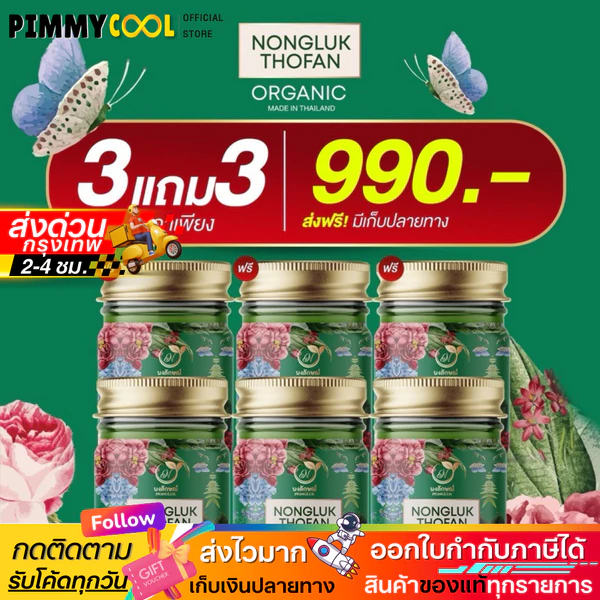 -34%
Nongluk Herbal Balm for Sensitive Skin, 50 g
Nongluk organic green herbal balm, 50 g
 -34%
Nongluk Organic Onion Herbal Balm for Nasal Congestion, 50 g
Lavender-scented herbal balm for colds and blocked noses, 50 g
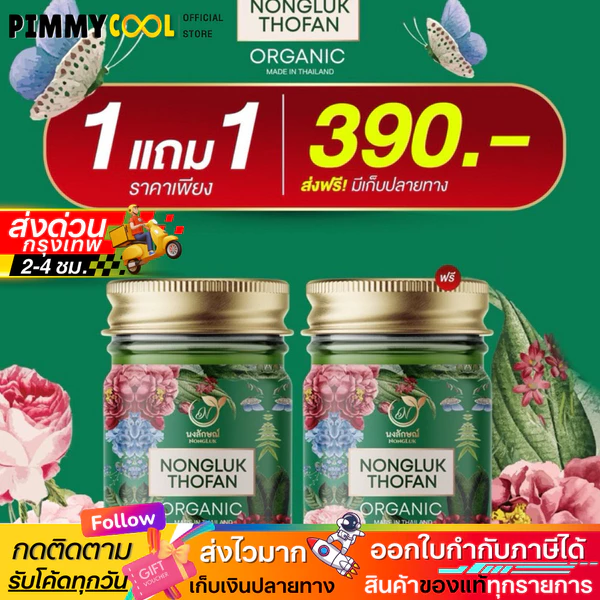 -34%
Nongluk Herbal Relief Balm for Aches and Sensitive Skin
Nongluk organic green herbal balm, 50 g