
Thailand's Push to Export Processed Herbal Extracts, Not Raw Herb

Thailand's trade strategy office has been pushing the country's herbal sector to stop competing purely on commodity pricing and sell more processed, higher-value products instead of raw dried herb. A government report published in September 2026 put the retail value of Thailand's herbal products market at roughly 1.36 billion US dollars in 2025, growing faster than many other FMCG categories, with dietary supplements already accounting for more than half of that market. For a buyer sourcing Thai beauty and wellness goods, this shift away from raw material and toward finished extract products is already visible in supplier catalogues.
The difference between a commodity herb and a processed extract is not just packaging. A raw dried herb is sold by weight, with price set mostly by harvest volume and freight, and a buyer has little way to compare one shipment against another beyond appearance and smell. A standardized extract, turned into a capsule, a tablet, or a liquid tonic, carries a defined concentration of the active compound, a shelf life backed by stability testing, and a certificate of analysis a buyer can check against the label claim. That is where most of the margin, and most of the quality risk, sits.
This matters most for buyers ordering ready-made Thai herbal supplements rather than raw ingredients. Garlic extract capsules, turmeric capsules, and similar single-herb supplement formats are common in Thai export catalogues, and they are exactly the category the government is trying to push further upmarket. Before confirming an order, a buyer should ask the brand for the extraction method used, the standardized concentration per capsule rather than just the herb name on the label, the GMP status of the factory that filled the capsules, and a current certificate of analysis for the actual batch being shipped, not a generic one from an earlier run.
Export paperwork is a separate question from product quality, and one should not be treated as proof of the other. Many destination markets regulate dietary supplements as a category distinct from ordinary food, with their own registration or notification steps before a product can be sold at retail. A Thai certificate of free sale or GMP certificate supports a buyer's own import process, but it does not substitute for checking the importing country's supplement rules with its own health or trade authority, and that check should happen before the order is placed, not after the shipment lands.
Buyers working with several herbal and supplement brands at once run into a practical problem on top of the regulatory one: each Thai brand sets its own minimum order quantity, lead time, and packaging standard, and coordinating multiple suppliers independently adds real time and cost. Consolidating several brands' supplement and herbal lines into a single shipment, under one set of export paperwork, is one of the more concrete ways to keep a multi-brand Thai order manageable instead of turning it into its own procurement project.
Thailand's cosmetic and herbal ingredient industry is visibly active heading into November 2026, with the In-Cosmetics Asia trade show bringing ingredient suppliers and formulators to Bangkok. For a buyer deciding whether now is a reasonable time to add Thai herbal supplements to a product line, the market's direction, toward standardized and traceable extract products rather than raw commodity herb, is a reasonable signal that the category is maturing in a way that rewards buyers who ask for documentation upfront.
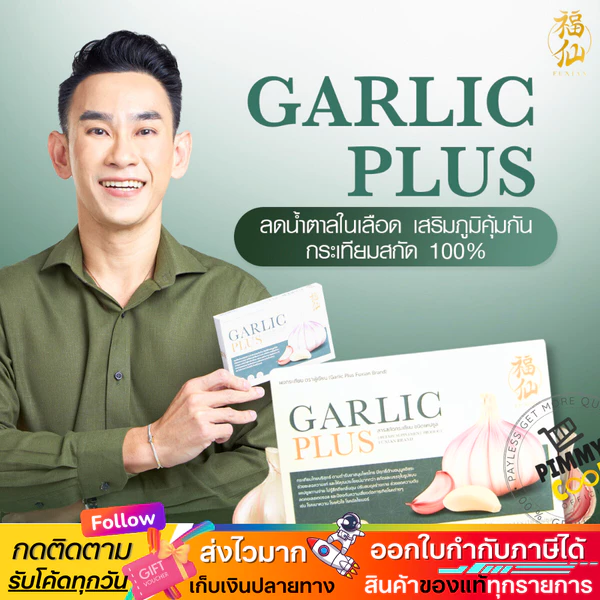
Product featured in this article: Fuxian Thai Garlic Extract Plus, 10 capsules
Products in this article
 -51%
Fuxian Thai Garlic Extract Plus, 10 capsules
Fuxian Garlic Plus capsules made with Thai garlic, 10 per box
 -52%
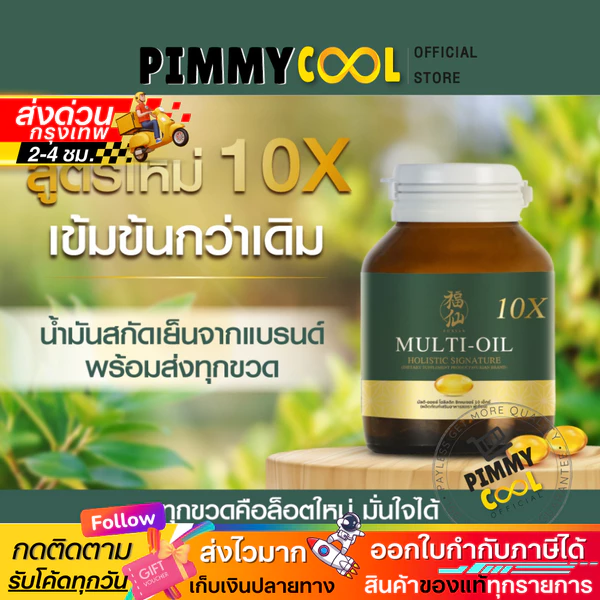
Fuxian Multi-Oil 10 Cold-Pressed Organic Oils, 30 softgels
Multi-Oil Holistic cold-pressed oil softgels, 30 capsules
 -12%
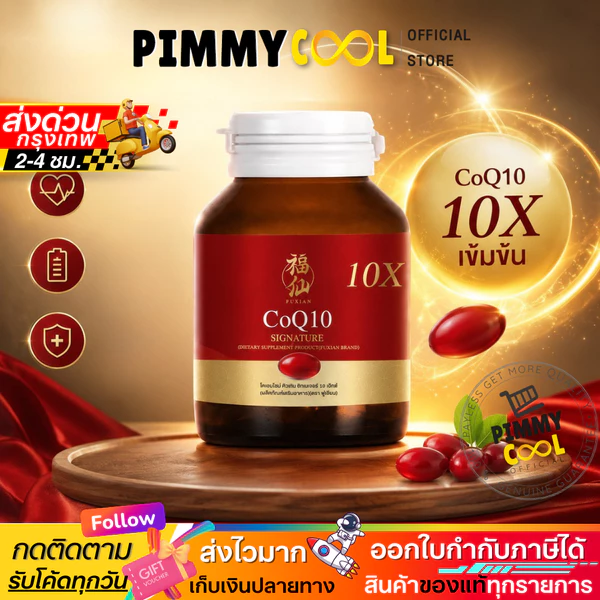
Fuxian CoQ10 10X Concentrated, 30 softgels
Fuxian CoQ10 Signature 10X softgels with ubiquinol, 30 softgels
-52%Fuxian Multi-Oil 10 Cold-Pressed Organic Oils, 30 softgels
Multi-Oil Holistic cold-pressed oil softgels, 30 capsules